Rome, encounters
Part 3 of my Rome 1984 travelogue

Links to parts one and two in this series:


In June 1984, I was part of a group of art history students who visited Rome. While that trip was an important part of our education, it meant much more to us. I was one of the few who brought a camera; this was when photography wasn’t for everybody, way before digital cams and smartphones existed.
In the previous episodes I’ve shared my first impressions of Rome and the ‘silent shots’ already, but in this post, I’ll show you some of the encounters with people, or rather scenes involving people. I wasn’t the one per se who interacted with the people in the photos; in most cases, I was more of an onlooker. The scenes are pretty random; this is by no standard an all-encompassing impression of the people of Rome.
All photos were shot with an Olympus OM 10 semi-automatic camera, with a Zuiko 50 mm 1.8 lens. I took six rolls of film with me, not much for two weeks in Rome.
Besides wanting to share my experiences of this trip with you, I hope to convince the photographers who intend to take up or have just begun with film photography that there are no ‘best quality for beginners’ film cameras (something I’ve read here and there), maybe there are just cameras you feel most comfortable with and are reliable, of course. Lenses, chosen filmstock and developing really make a difference; a SLR analogue camera is basically a film holder with refined mechanics, and some electronics to assist you when taking a photo, e.g. a built-in light meter or a flash hotshoe.
In the crowds
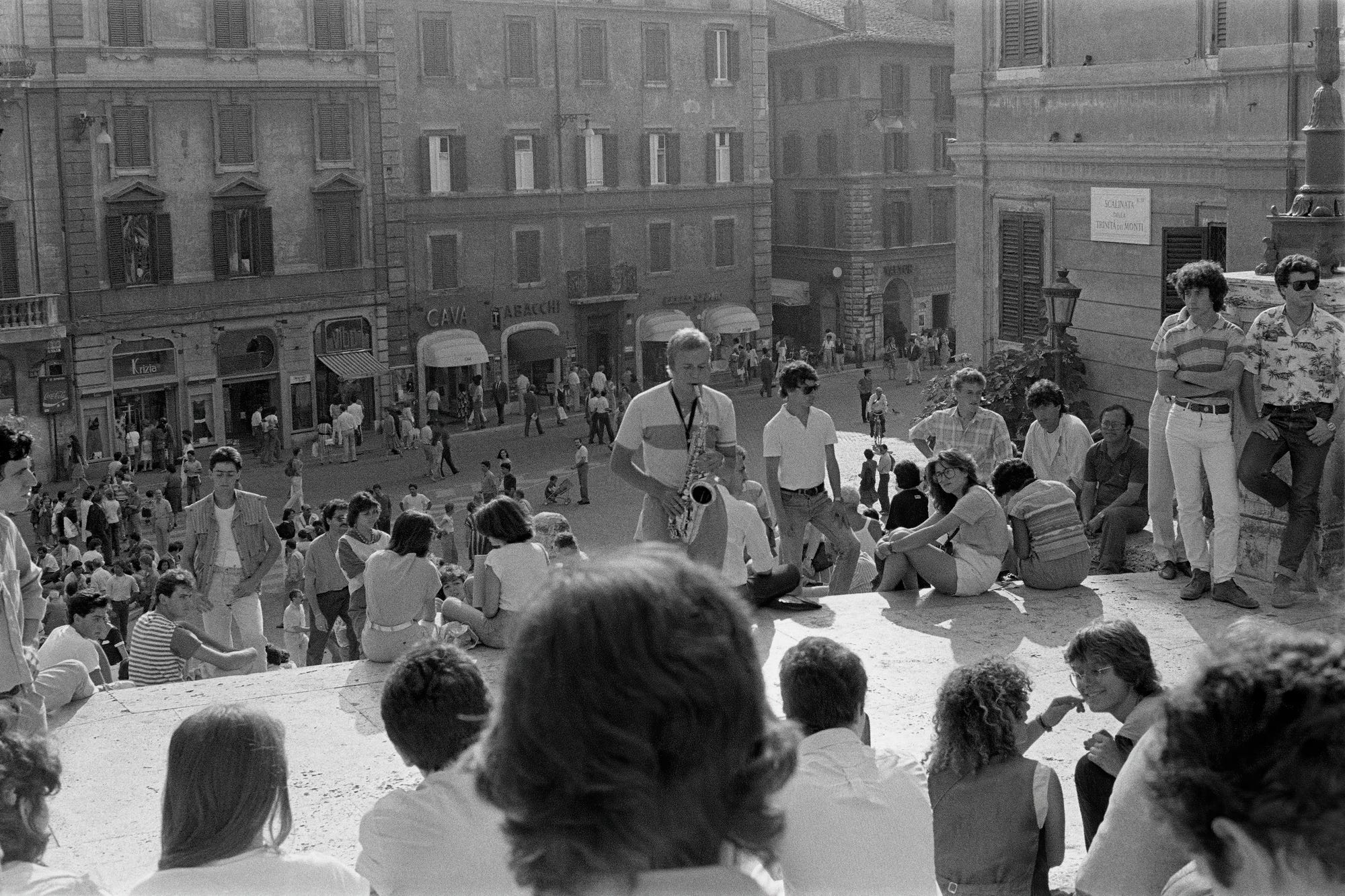
In the first part of this series, I presented two photos of the often crowded ‘Spanish steps’ already. The photo of this saxophone player was taken from the point where I was sitting, in between people, the musician’s occasional audience. As you can see upon closer inspection of the image, just a few people around this street musician were actually paying attention to him or his playing. The young guys on the right were acting tough (I didn’t think there was anything particularly tough about them), the couple a few steps down (the guy reminded me of John Denver) seemed to have eyes for each other only. I like taking photos of nearby crowds; there’s always a lot to see, and studying faces feels educative in a way.
From one monument to another
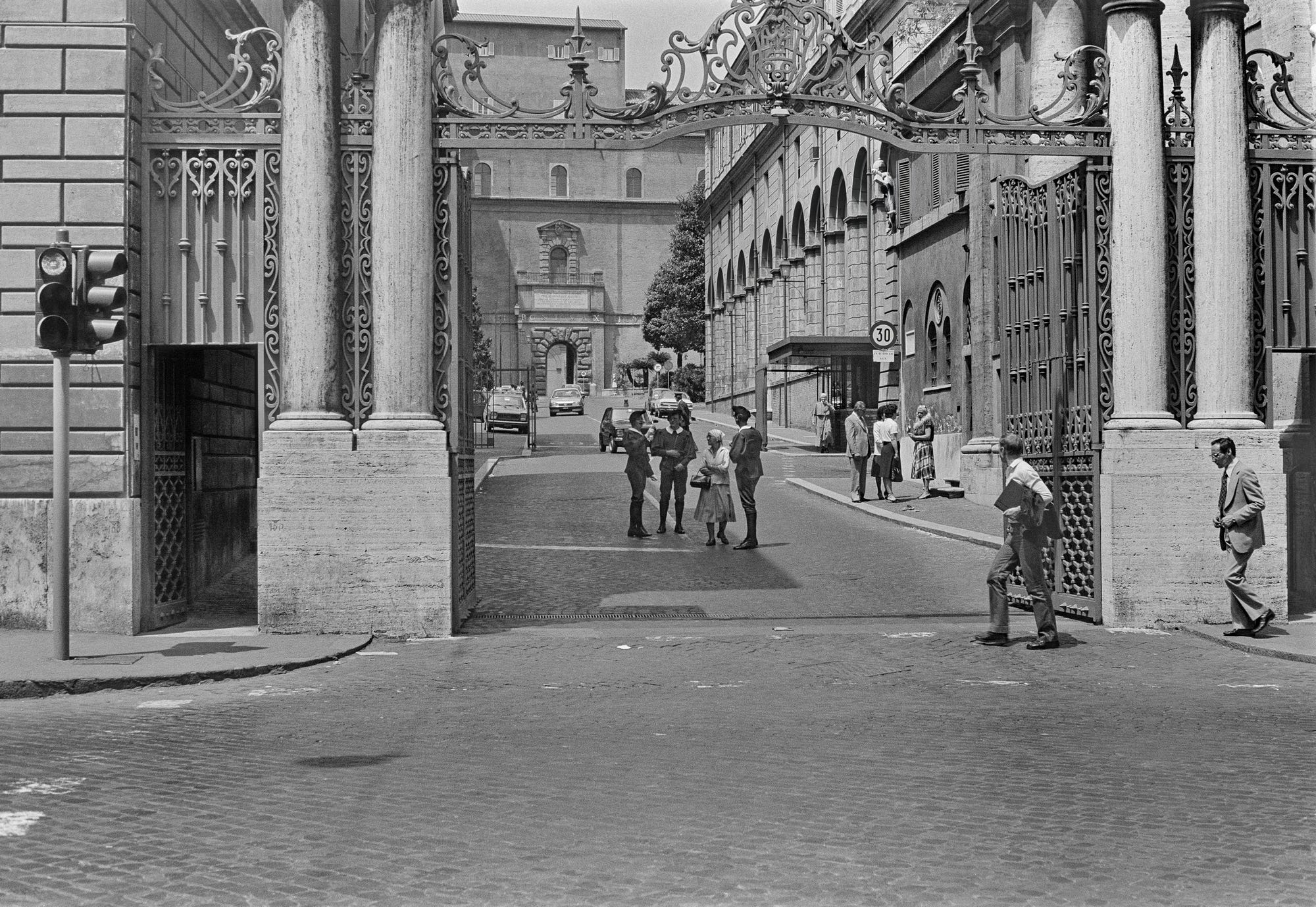
Our activities as art history students took us to many historical buildings (a lot of churches!), and from the Roman forum to the piazza’s with their baroque scultptures and architecture. This took place daily, roughly from 08:30 AM to 12:30 PM. After that, ‘monument fatigue’ and the scorching heat made it difficult to continue, although it happened a few times we were going until the early evening, due to getting behind on our scheduled visits.
On the walks in between monuments, there always was Rome’s city life, which I found almost equally inspirational as the classic beauty we went to see.
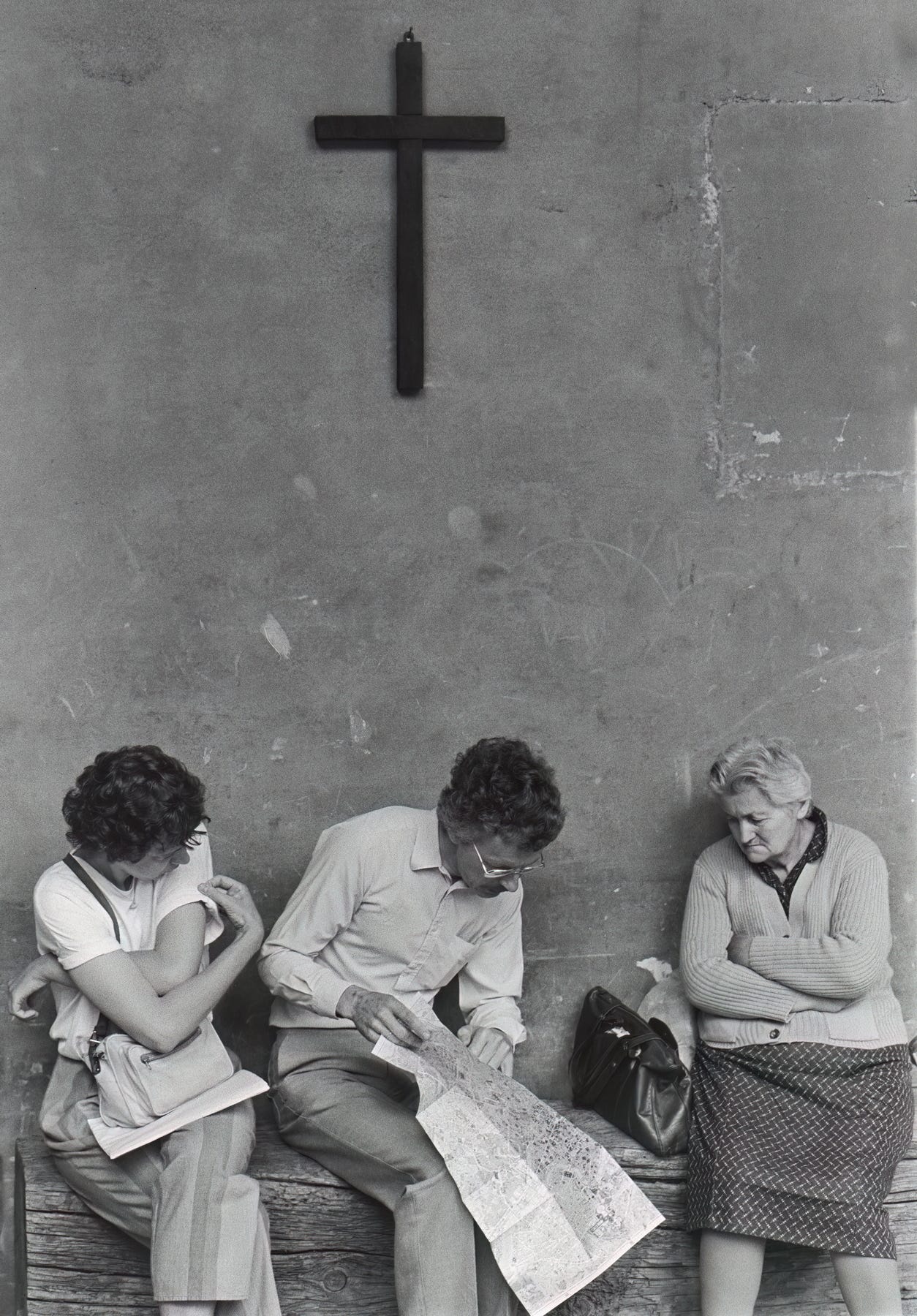
Rome is huge, and even our experienced supervising professor and his assistant got a bit lost every now and then. In the photo above they are asking the old lady on the right for directions. She had been sitting there quietly in a church courtyard, and wasn’t really interested in explaining foreigners how to get tot heir next stop. I found the different postures (note their arms) of these three people telling. The cross above them added a fortuitous element to the scene.
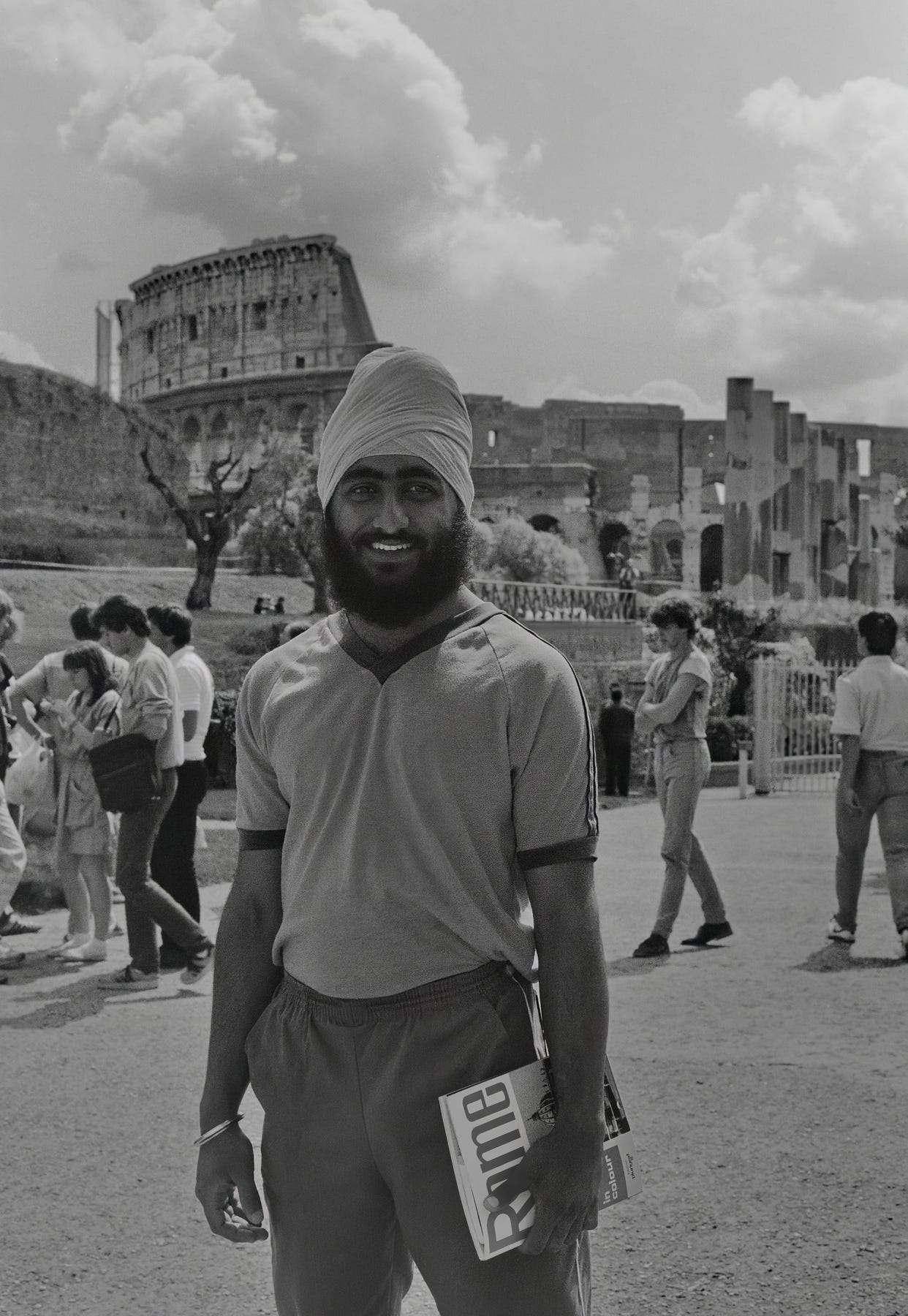
Having just visited the Roman forum, I encountered this Indian man, who was as obvious a tourist as you’ll ever find. I asked him for a photo and had a short chat with the guy. He told me he was fortunate enough to have a well-paying job in India that enabled him to visit Rome. We were on our way to the Colosseum, which is in the background. Although the light wasn’t ideal, I didn’t want to miss the opportunity to take his photo with a tourist attraction in the background while he was holding his tourist guide.
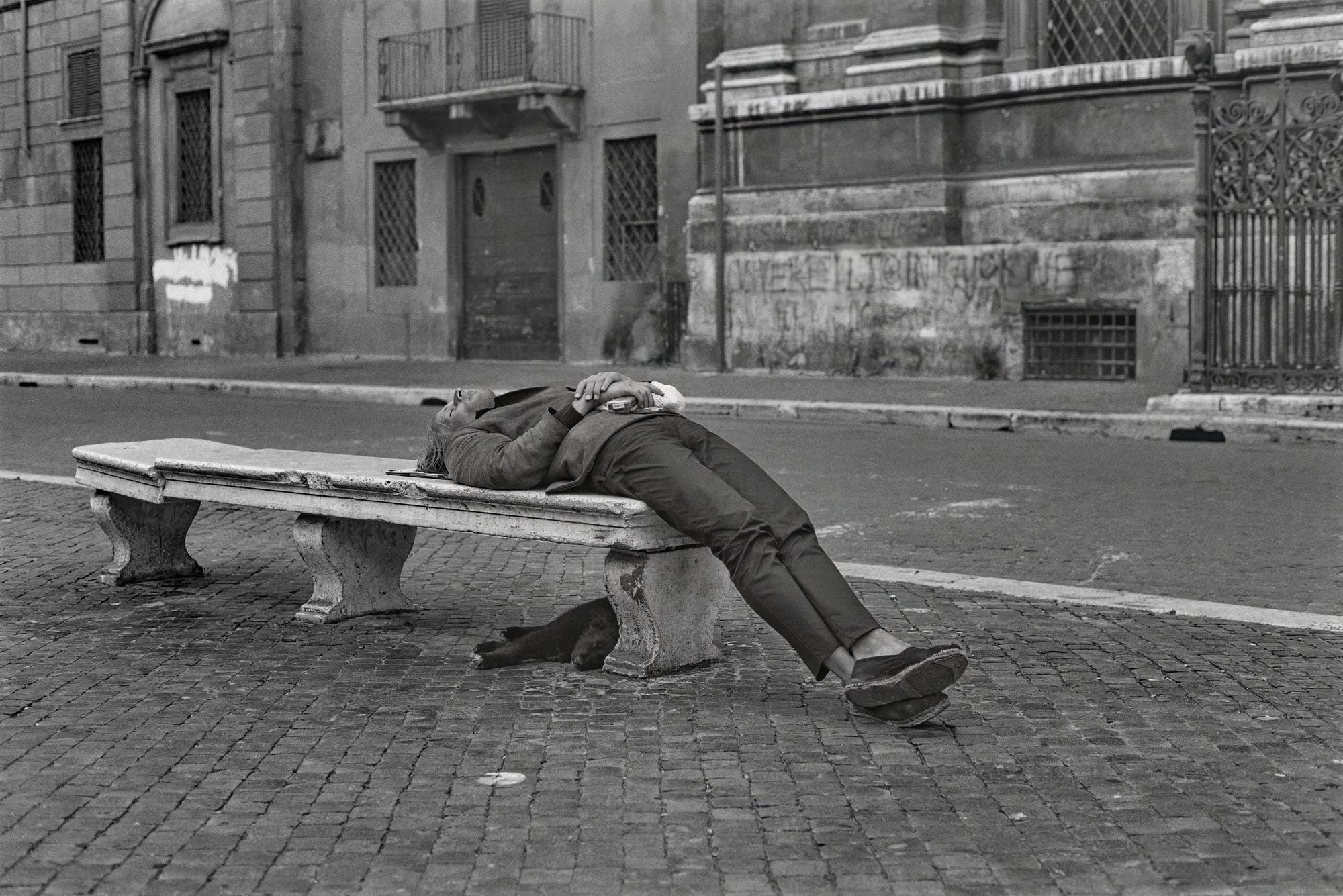
What struck me during my stay in Rome, was the number of people (mostly men) sleeping in public places, out in the open, going largely unnoticed by other people. This man, untended but not in a terrible state, seemed to live on the streets with his dog, who, despite his young age, had found a better place to sleep than its companion, given the fact that Rome afternoons tend to be sunny and hot. It was overcast, so it didn’t make much of a difference that day. But the broken bench he slept on was on a piazza, not in some backstreet alley.
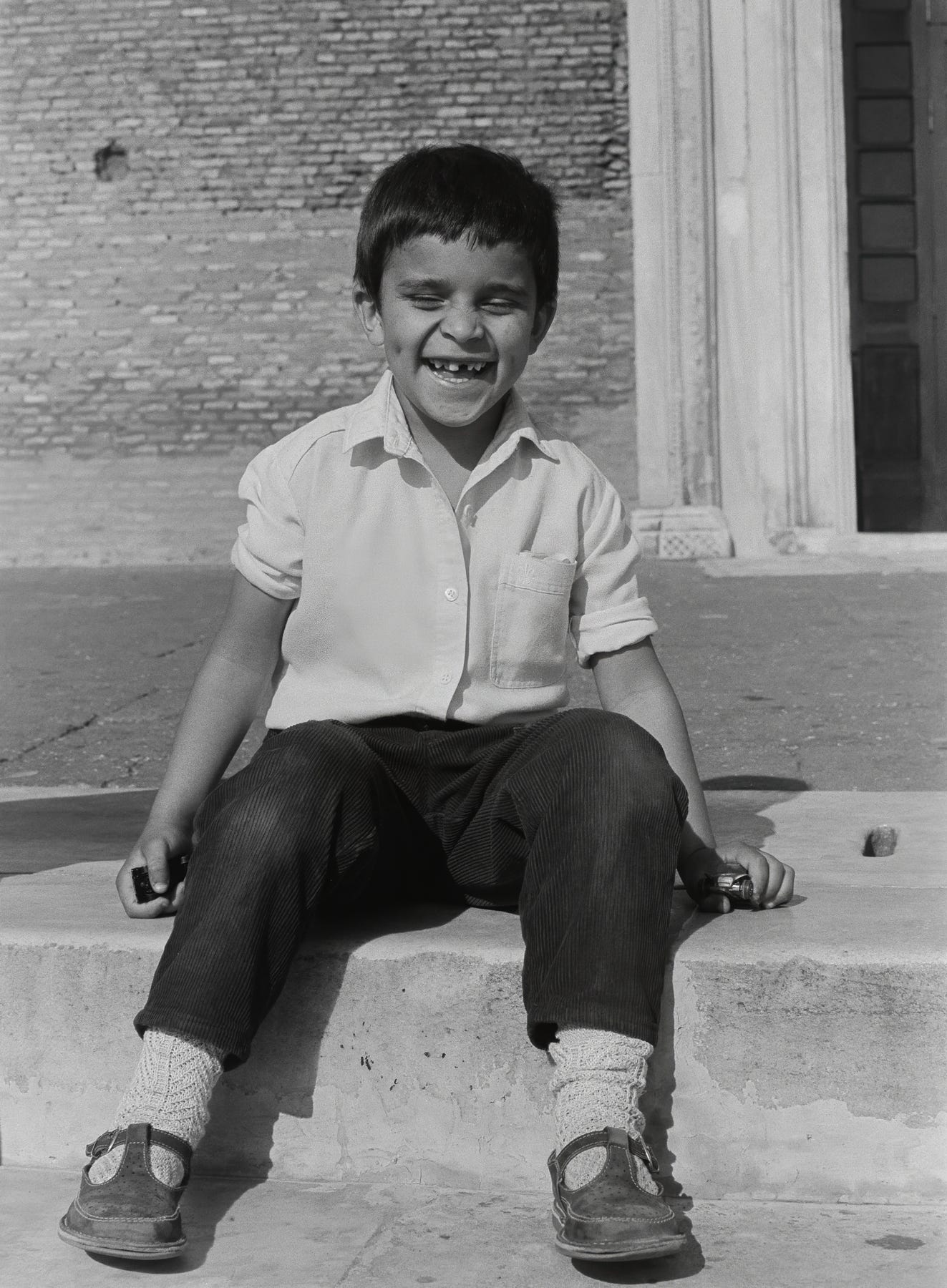
When I was descending the steps in front of the church in the background, this boy was playing with toy cars and imitating their sounds. He was fully absorbed in his playing and didn’t notice me. His father was a few meters away, smoking a cigarette and looking out pensively over the city. I stopped and when he did notice me, I asked him which car was his favorite. He looked at both toy cars and replied that he didn’t know. Holding up my camera (so that his father could see what I intended to do), I told the boy I was going to take his photo. He burst into laughter and and kept laughing, even when I waited for him to open his eyes. Somehow he found the idea that he was being photographed, ultimately hilarious. Maybe because his pretty thick and heavy socks were overheating him, or because I had used the word ‘macchina’ referring to a toy car, I don’t know. His father smiled faintly, then continued to look away.
People at work
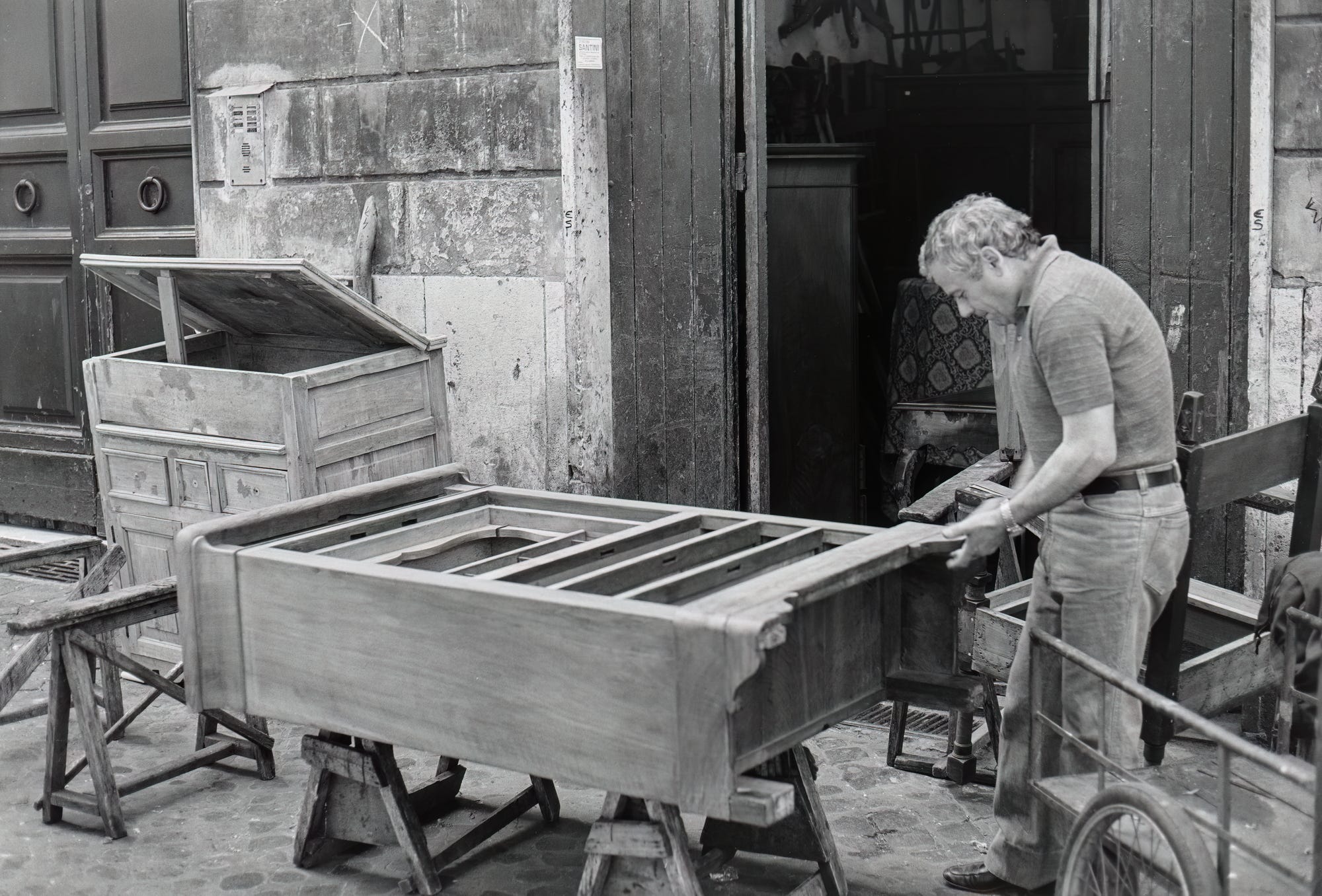
In a small dead-end street, I found this woodworker, who was restoring furniture, only using hand tools, outside of his workshop. He greeted me friendly, and we had a (very) short talk. He didn’t mind if I took a photo of him on the job, a type of photo I’ve always enjoyed doing, but at the same time makes me feel a bit uneasy. It can feel like treating work people do for a living, and how they do it, as some kind of touristic sight, and I can understand why people wouldn’t like their daily work to be photographed.
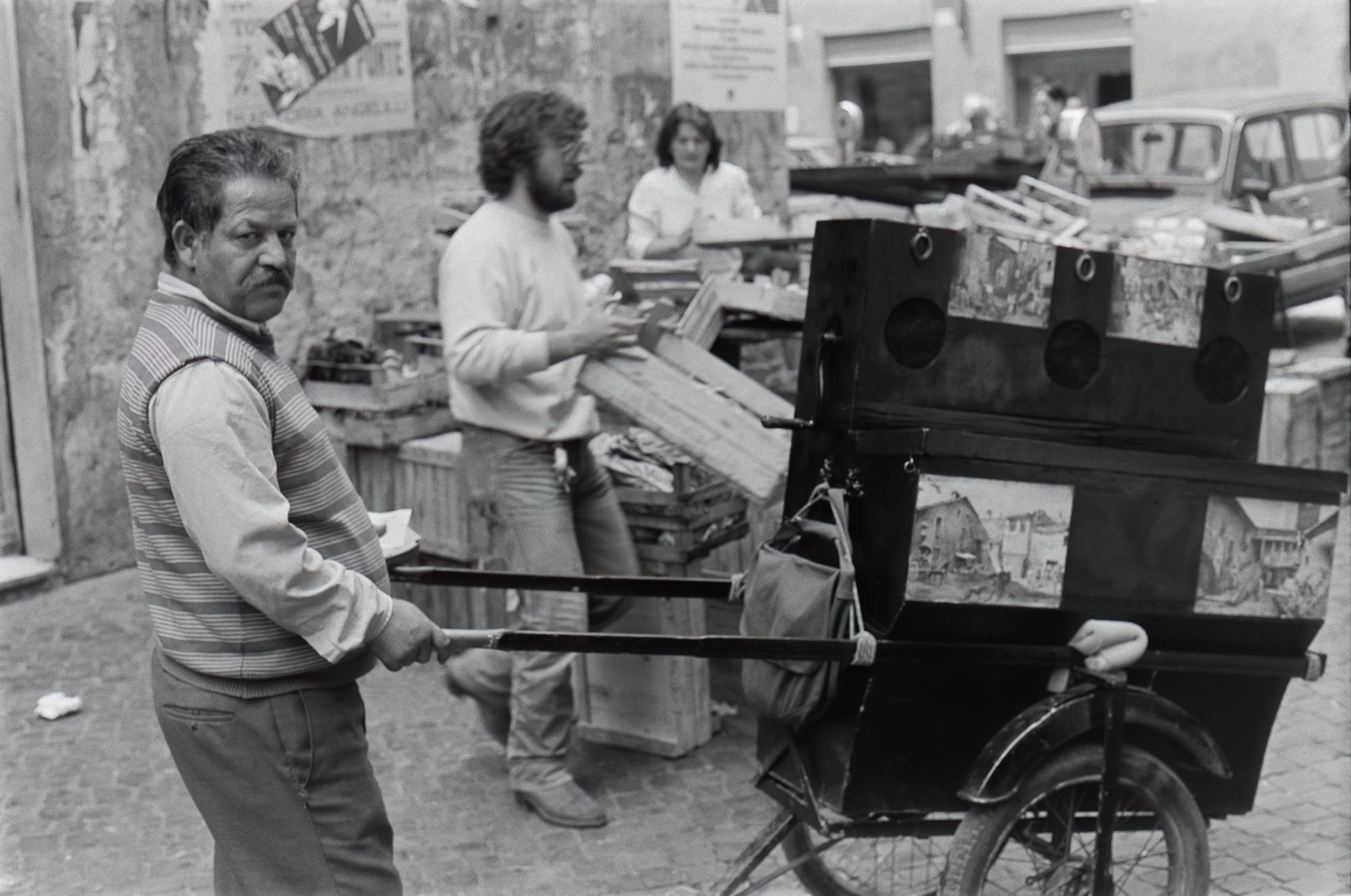
The man in this photo certainly wasn’t happy with me. At first, he gave me a smile, maybe he expected me to give him money because he was passing with this contraption that looked like a little manually operated organ on wheels, but clearly had something like a cassette player, or even a radio, inside. If he would have turned the crank of the instrument to produce music, I might have given him something, but he was just walking by with (terrible) music coming out of his cart. When I was putting my camera to my face, he was not amused. He was mumbling about the situation, most likely unfriendly towards me, in a language I didn’t recognize.
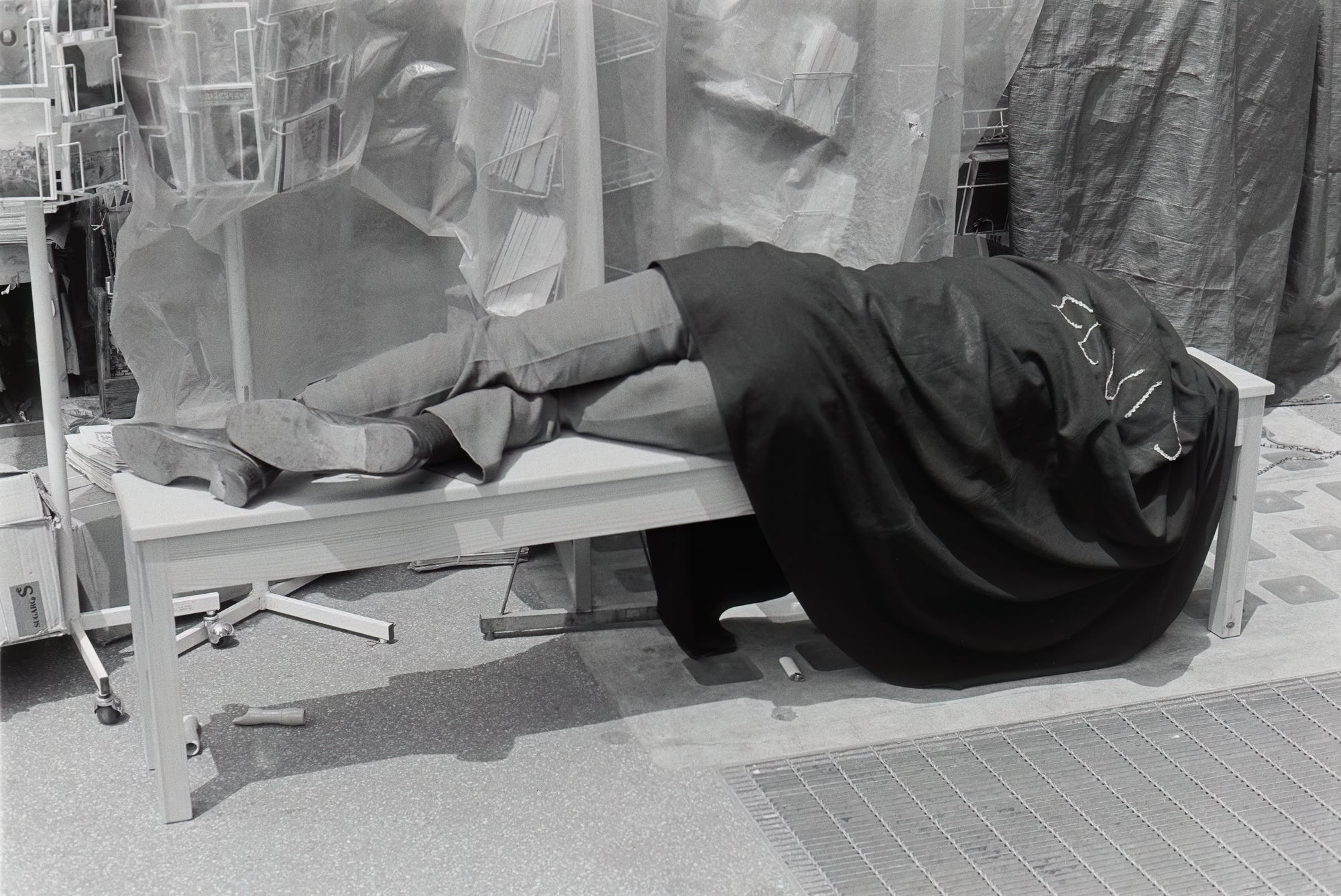
The first thing I noticed when I saw this sleeping man, was the cape (or is it just a cloth?) he was lying under, with the name “ELVIS” embroidered on it. It seemed so strange to me: it was at least 30̊ C, sleeping in such heat under a black cape and being obviously confident that nobody would touch his ‘merchandise’. The card stands were covered with plastic, seemingly sufficient insurance against theft, or was he trying to prevent decoloring of his postcards? Had his mother made him this cape with the name of his favorite artist? Did he play the recorder to attract customers? I will never know. That may be one of the charms of street photography. And again, sleeping on a bench in the middle of a piazza, but for a postcard-seller, not so surprising.
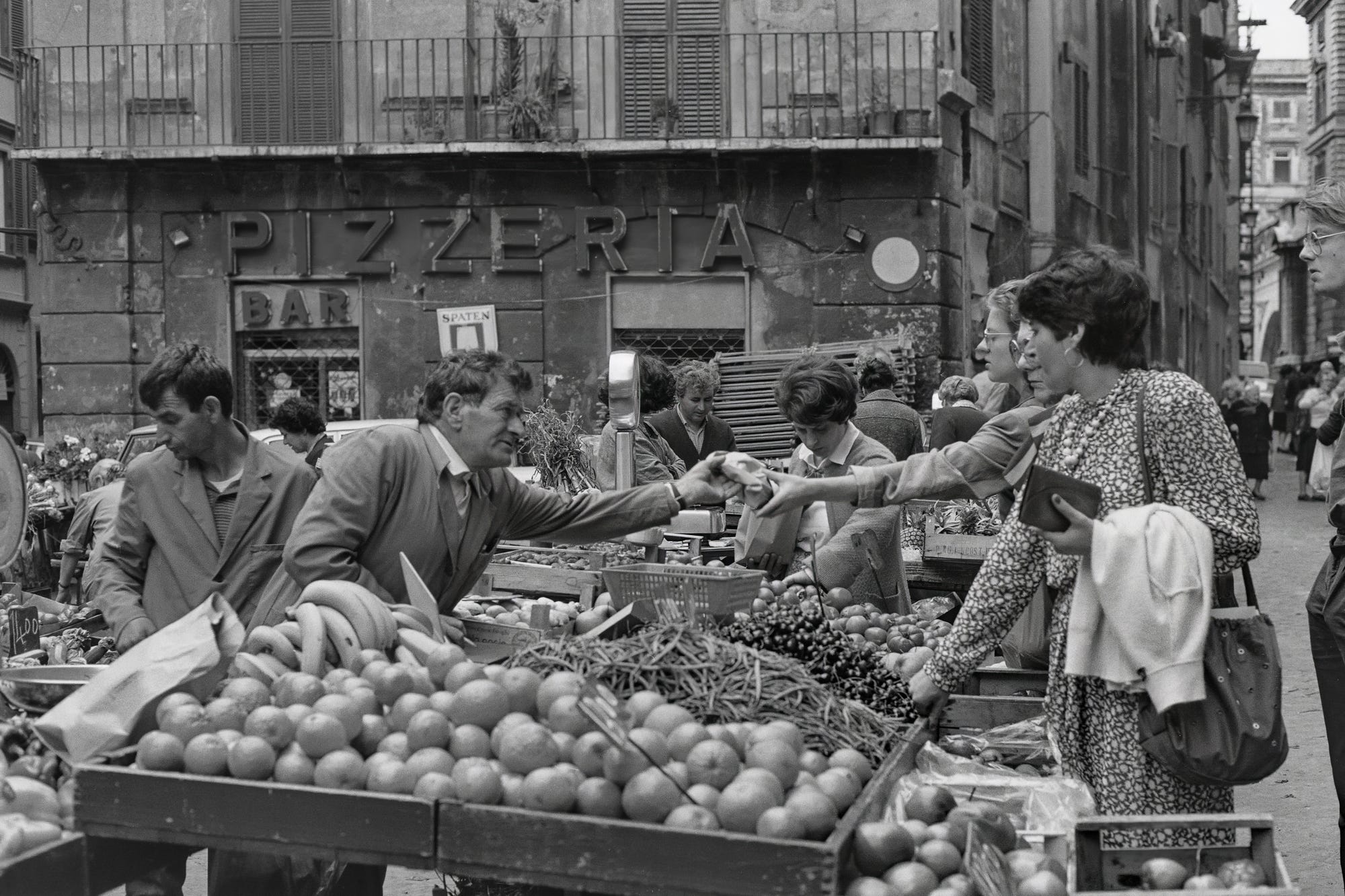
Walking with some fellow students to a (another) church, one of them wanted to buy some fruit at this little market, that had many local customers. I photographed the moment the fruit seller handed her the fruit she’d bought. I disliked the huge ‘Pizzeria’ sign in the background, because I thought it would distract from the scene, but seeing it again, I like it now, because it simply belonged there. I would have liked to shoot the scene in the street on the right as well, if we wouldn’t have been running late already.
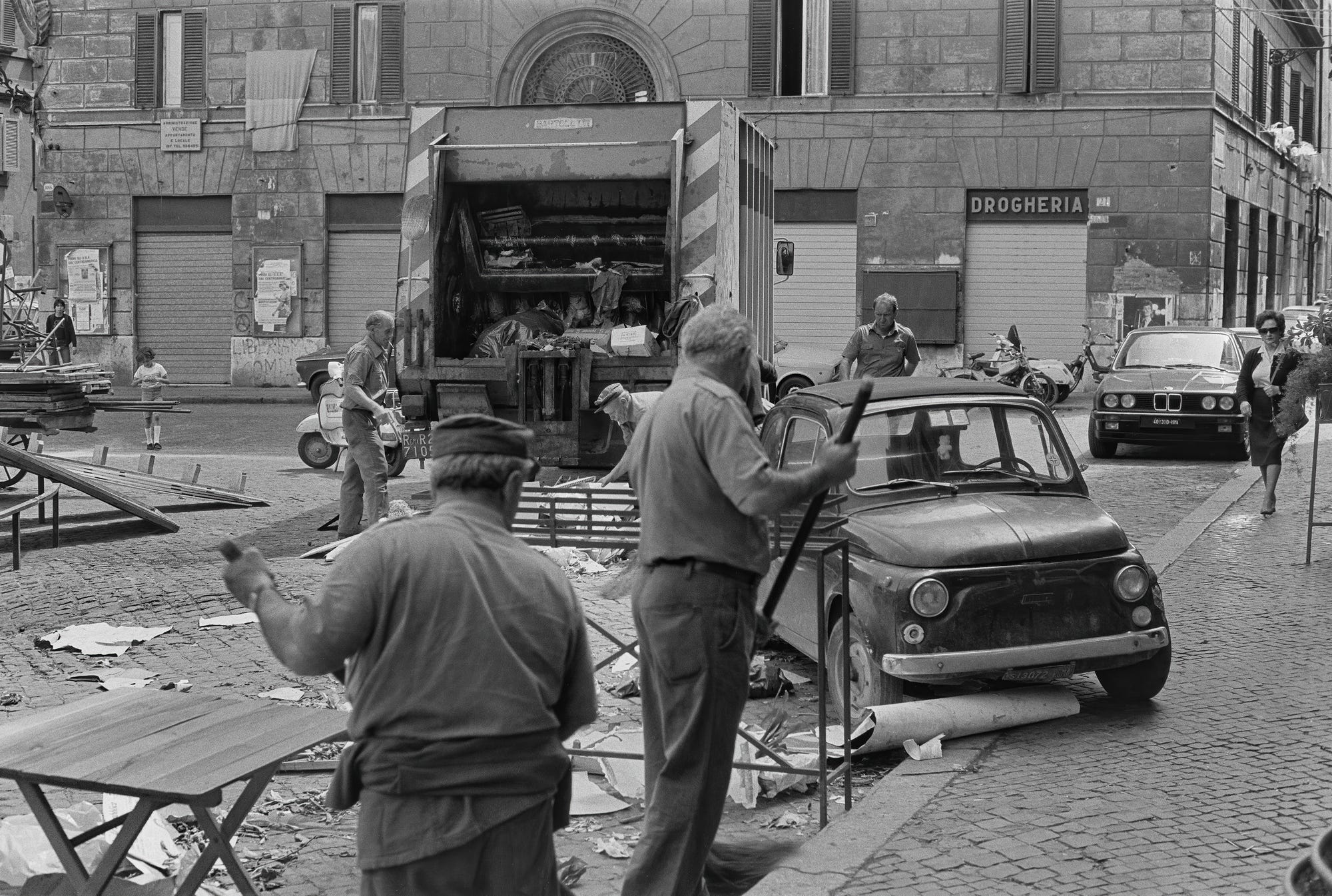
This photo, showing men cleaning up after the market on the Campo Dei Fiori, is one of my favorites. Not only is the ‘action’ captured in a way I’m happy with, but the space around it is interesting as well: the “cinquecento” (Fiat 500) casually parked sideways on the edge of the pavement, a well-groomed lady walking by with her fancy handbag and the two on the left, a young man and a little boy, with clothes that clearly show the age of the photo. The stands and wooden boards testify to the fact that there was a market here.
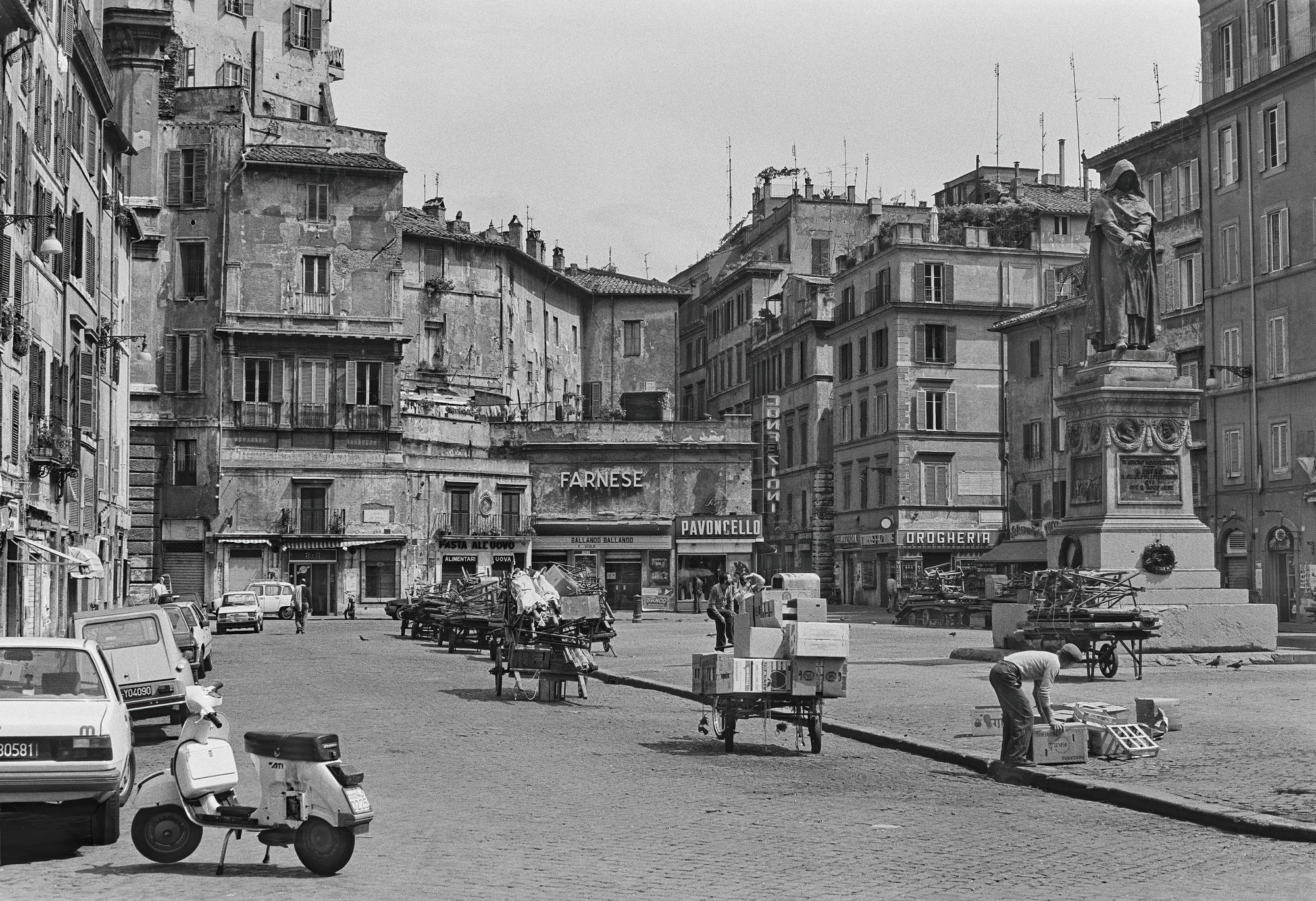
On the same piazza, an older man was packing up crates and boxes on wooden hand carts. His clothes and cap make me think back, asking myself if I thought those clothes were outdated in those days already. I’m happy to have photographed these two market scenes within a few minutes from each other. At the time I was convinced already they would be nice, but I’ve come to like the photos better every time I see them, as if their being a record of times gone by alone makes them stronger. The statue of Giordano Bruno, a 16th century philosopher, with its shadowed face looking down on the piazza, is of the late 19th century. It commemorates the burning of the philosopher in 1600, and has been the cause for arguments between the church of Rome and free-thinking pantheists.
Hanging out at ‘Rosticceria Umberto’
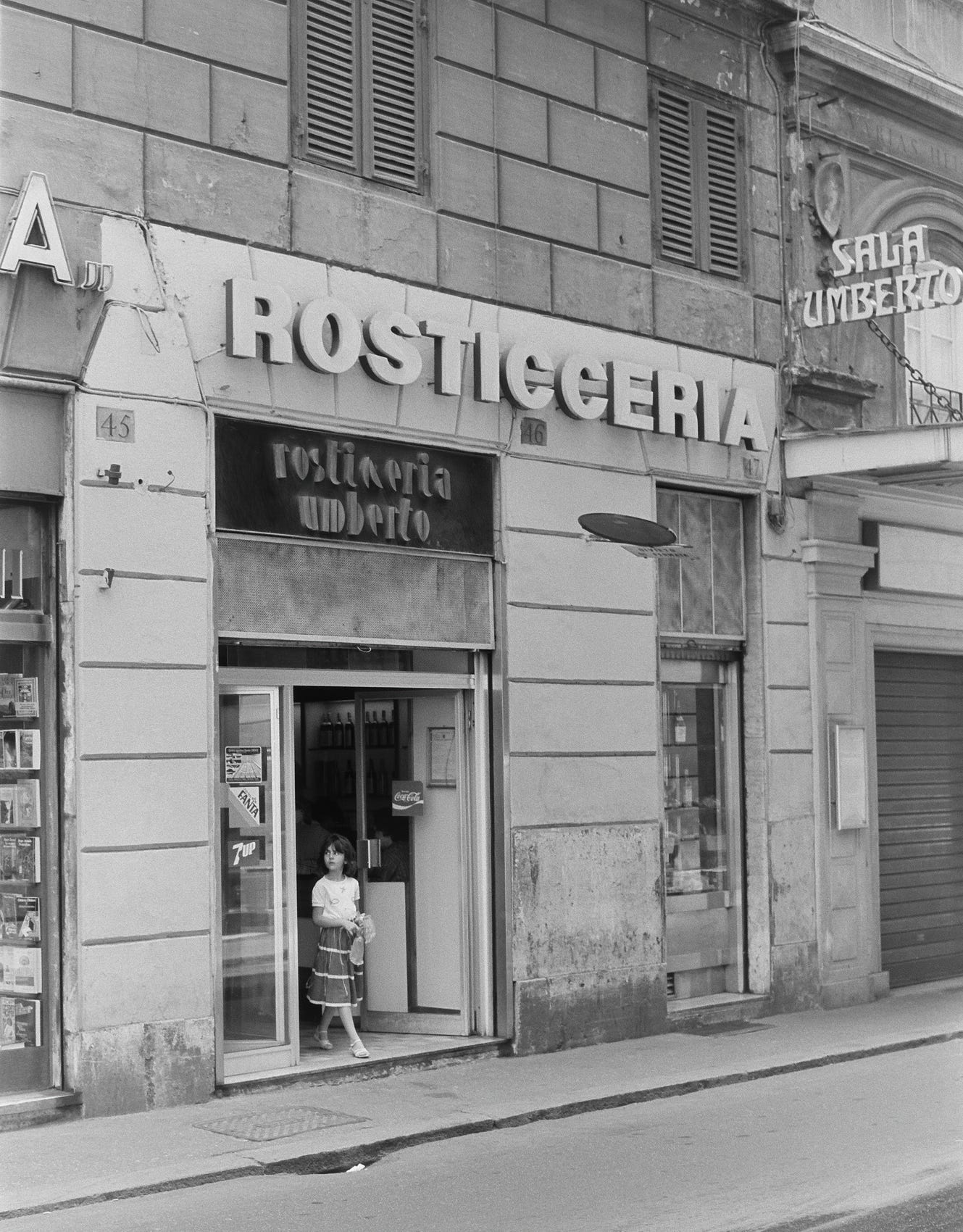
When you’re spending two weeks in a city like Rome, it’s great to know a place where you can get something to eat and drink that’s not expensive or posh. We found such a place: the local ‘rosticceria’, where you could sit at a tiny bar between locals, and they even sold foodstuffs to take home, as you can see in the photo of this girl exiting the place, likely sent on an errand by her mother. The rosticceria was next to a little bookshop, in an unassuming street (to Roman standards), the via di San Vincenzo.
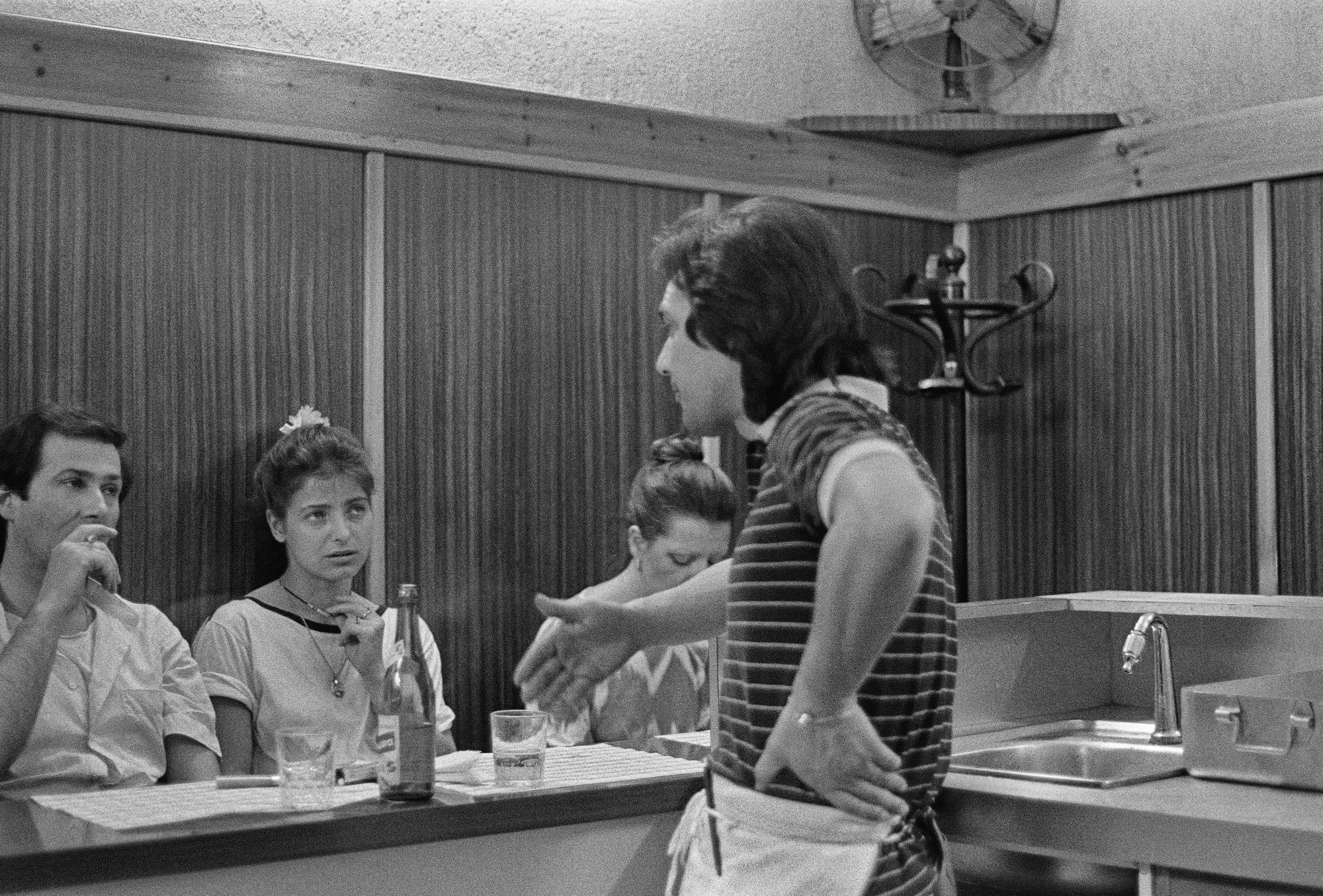
This photo shows how tiny the bar-and-eating-area of this rosticceria was, that became the favorite ‘hangout’ of a fellow student and myself during our stay in Rome. We quite liked the absence of tourists (excluding ourselves) and the easy-going atmosphere. The pasta and its sauce were wonderful, the light red wine was served in longdrink glasses and the espresso felt like a gentle tap in the face. But the main attraction to us was the authenticity and the total lack of arrogance.
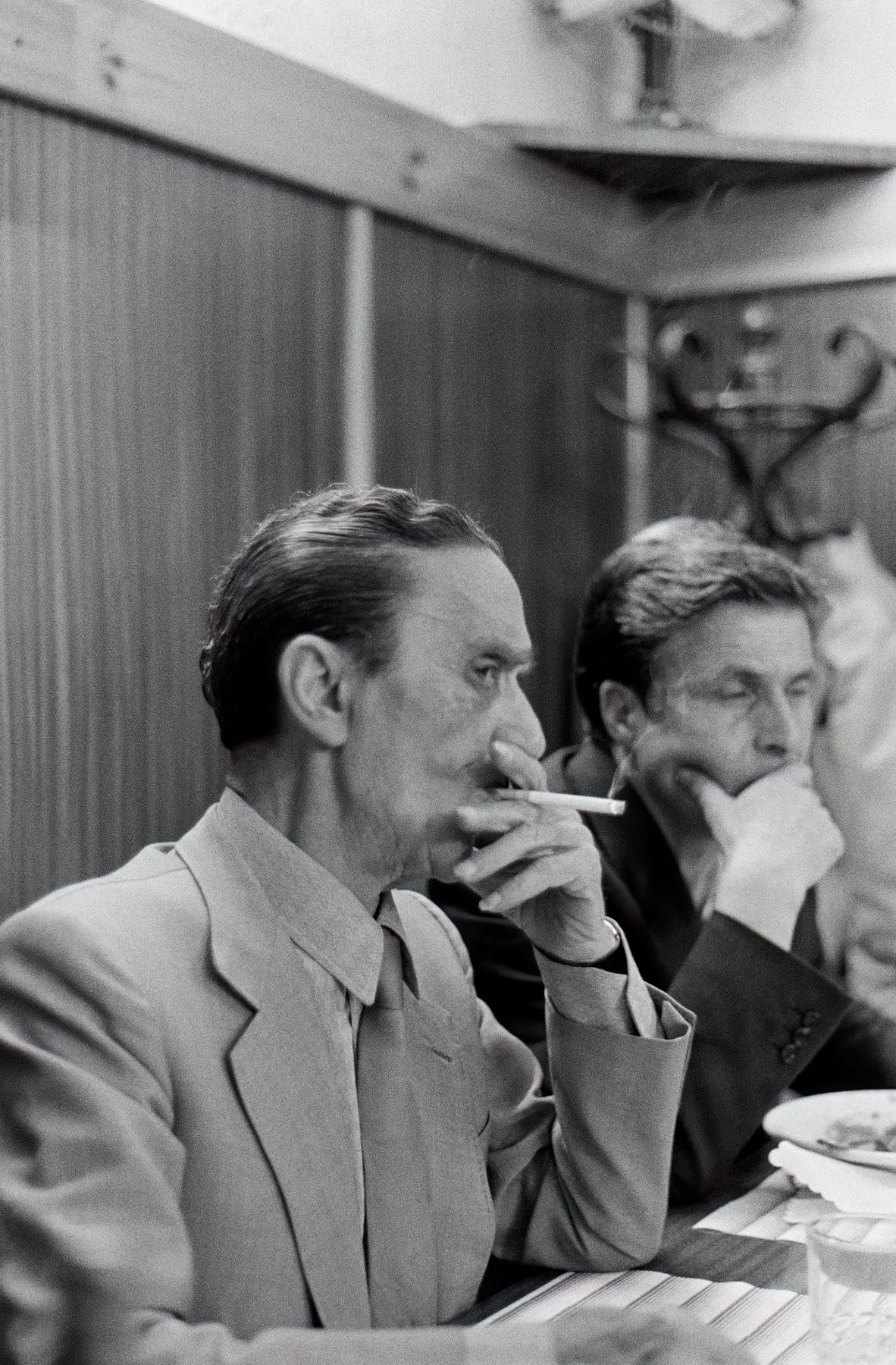
But not everything there was great: some day, an older gentleman with a suit and pomaded hair walked into the bar, and after sitting down, started staring at us angrily without any cause. He then said to the owner, loudly, that we didn’t belong there, which pissed off the owner, who told him to shut up and leave us be, and if he didn’t like it, he should leave. The man was quiet immediately, but obviously frustrated, which I simply had to photograph. The way he’s covering his mouth holding his cigarette says it all. The man next to him was embarrassed with the situation and closed his eyes, also covering his mouth. The owner apologized to us and poured two glasses of wine, equally loudly stating “on the house”, which was the final straw for the angry man, who got up and left, without saying another word.
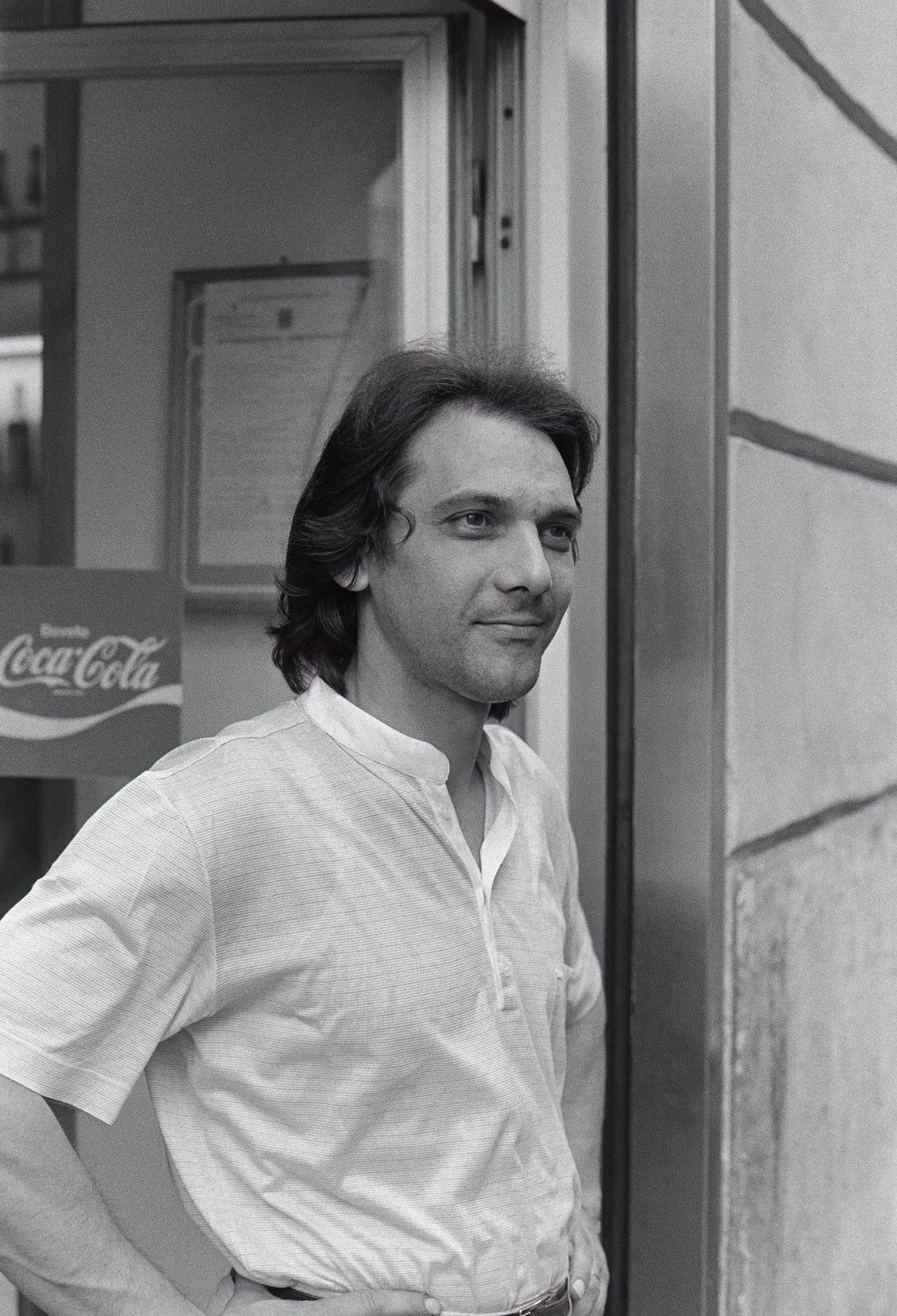
This young man, Marcello, was the guy who had ‘saved’ us from the evil eye of the angry man mentioned above. Marcello was very proud of his place, tiny as it was. He liked us and even invited us to a party; he promised he would come to pick us up in his Lancia (he mentioned the brand, which seemed a bit silly to me), but we had to leave the next day, so we declined the invitation, which disappointed him slightly. He took us to say hello to his mother, who was behind the counter of the shop and proudly said “Marcello is my son”, which we already figured out when she was introduced to us by Marcello as his mother. I liked the quasi-nonchalant but proud pose he took on when I was taking this photo.
The impact of Berlinguer’s death
In part two of this series, I mentioned Enrico Berlinguer already, the well-loved leader of the Italian communist party, who died when we were in Rome. It is hard to imagine nowadays how much impact this had on daily life in Rome.
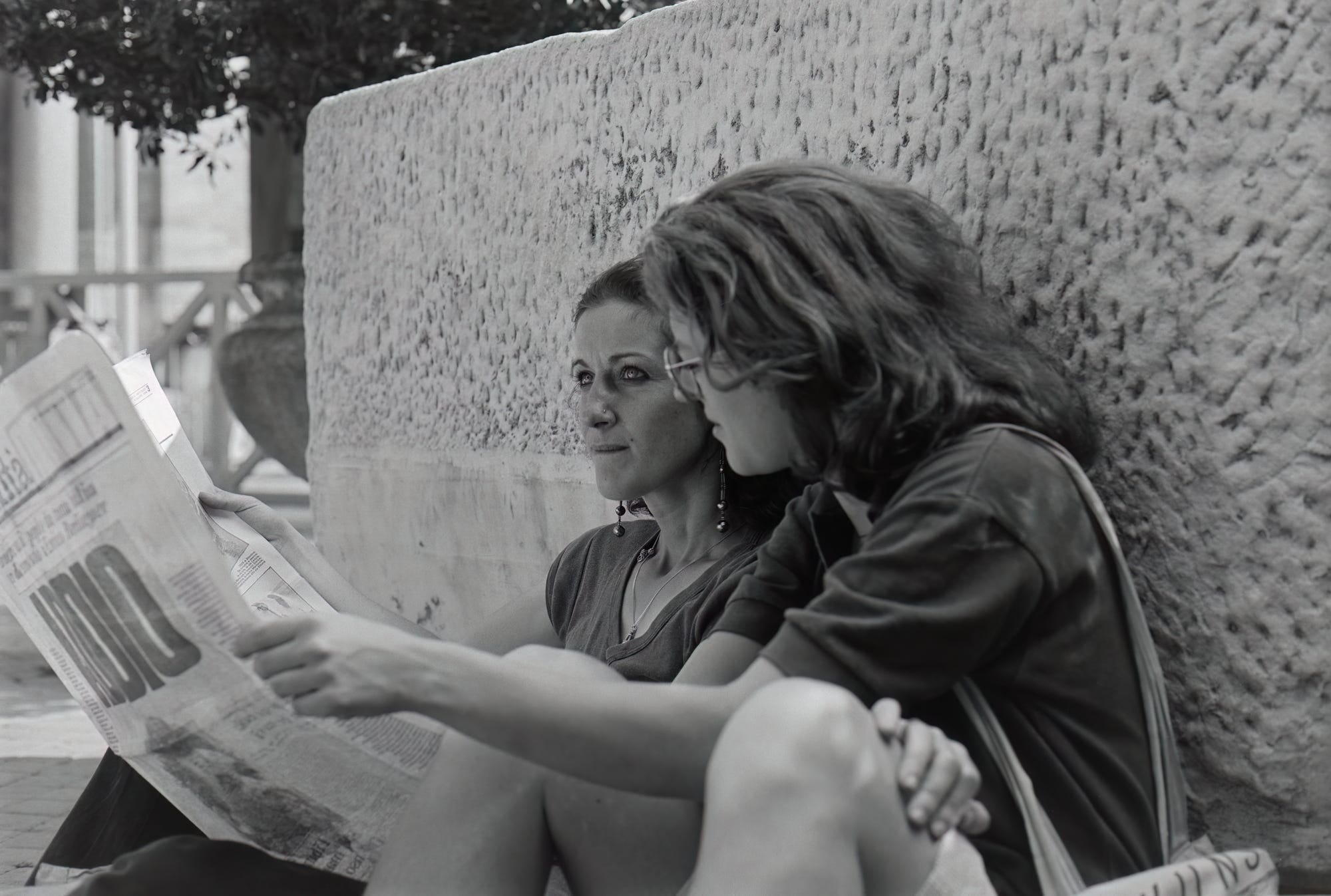
Two of my fellow art history students, sitting against the base of a statue, read a newspaper with “Addio” (goodbye) on the front page. The paper was full of photos and articles about Berlinguer, which impressed my fellow students, who, just like me, had never heard of this man previously.
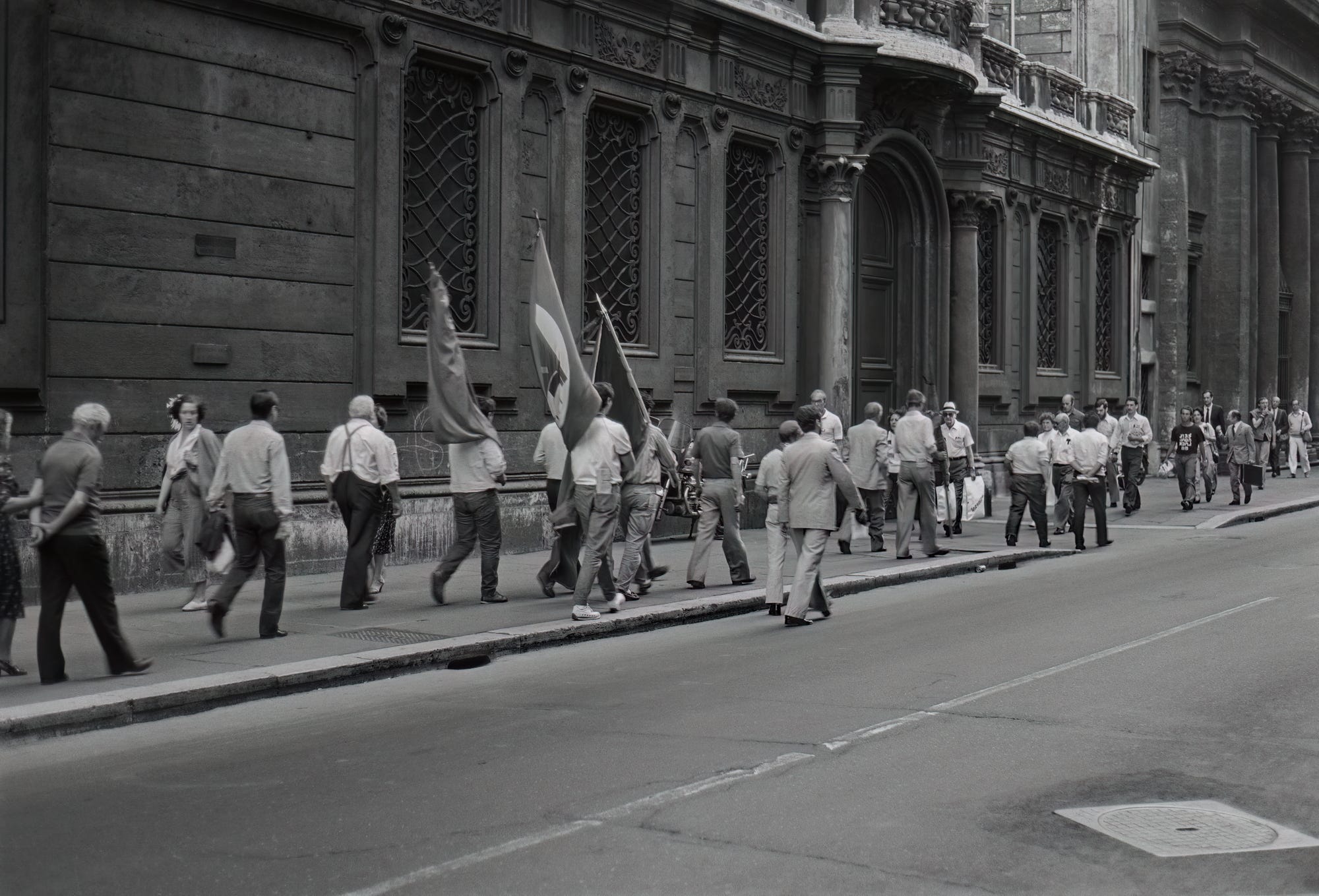
The serious mood that the death of Berlinguer brought about, can be observed in this photo, which has silent despondency written all over it. The sky was overcast, even a bit dark. Since I had a ‘slow’ film in my camera, I did not have much choice in the settings. I wanted some depth of field, so the shutter speed couldn’t be very high. As you can see, there is motion blur in the shot, which I didn’t opt for, but liked afterwards, as I think it lent a kind of grace to the image. I like the face of the lady on the left who walks in the opposite direction to the people in this procession, and the dark facade of the building they pass by.
This seemed a suitable shot to end this part of my Rome 1984 travelogue. I hoped you have enjoyed reading and viewing it. Please feel free to comment!
Wow, the Campo di Fiori images are just wonderful. I am particularly drawn to the long shot down the side with the men with the push-carts and the Vespa in the foreground. It is superb. I remember the square well from the late 70s and early 80s. Not much has changed. The Vatican with the lady speaking with the Swiss Guards is equally lovely, it feels very open. There is time to chat, no risk of anyone doing anything stupid. Your memories are crisp and clear and you tell a great story accompanied by a great set of images. Really, really lovely! Thank you very much for this wonderful set.
Another good one! The Campo de' Fiori and furniture repair photos are lovely. Is the furnature repair shot from Testaccio?